
The Detector and the Discreditor
On Pangram: When you have No Skin in the Game

Unlike much of my writing on this channel which is considerably slow and takes me on divergent tours of research and contemplation, the subject of this essay compelled me to spend all weekend vociferously writing a response. I would otherwise be thinking and tinkering on a completely different essay for Technology For Humans, on US political software in an inhospitable hosting environment. Instead, I became distracted by the growing feud on Substack around the rollout of the AI detection tool Pangram . In some ways, the same - a software in an inhospitable environment.
This short(er) essay is my rapid response to the articles I’ve been reading here such as the CEO of Substack, Chris Best ’s “Against Claudefishing” ; Freddie deBoer’s “I Wouldn’t Say Pangram is Broken, But I Would Say That It’s Brittle”; and Substack’s "How writers are reacting to Substack’s AI transparency tools” and all their fascinating and extensive comments sections, which made me engage with a more paradoxical narrative I have tried to expose in the title “The Detector is the Discreditor”. I also had a meeting with my friend Elena during the weekend who shared the work of Abi Awomosu, "Writing Was Never a Test of Who Could Think” proposing that AI is a medium, and which had some very interesting insights I was also compelled to respond to. All references are available in the end.
100% False-True
Freddie deBoer, a writer who’s never used AI in his work, gets flagged as 100% AI-generated by Pangram . So, he decides to investigate and what he finds was sobering. The tool declares the same text ‘human’ or ‘AI’ depending on the surrounding context. At times it produces mutually contradictory verdicts on the same essay, or flags sentence-level ‘highlights’, in this way multiplying the probability of false accusation into the thousands.
His conclusion outlined in “I Wouldn’t Say Pangram is Broken, But I Would Say That It’s Brittle”1: the technology is brittle and inconsistent. And even when knowing this, it’s still being deployed with severe consequences as Substack has now done under the heading of ‘doing something’.
I will push this further. I believe all this is hiding something more insidious in plain sight, which if the owners of Substack were eager enough to understand, would give them cause to pause: that this is part of a quiet war on original, creative and critical writing, and that they are arming it. There will be many “unintended consequences” as my dear generous-spirited friend Luke likes to describe the havoc we sometimes wreak, even with the best intentions. But at times, these consequences are very much intended and deliberately designed in.
Much of the work I do involves what I have termed ‘Structural Perspectivism’. I believe that no system - algorithmic, institutional, linguistic or cultural - is neutral; and that all systems possess in varying degrees an inherent structural bias or foundational framework – be it a set of constraints, blind spots, historical assumptions, training data, societal beliefs, operational logics and so on (let’s call it a story) that dictate what can be seen, said, experienced, imposed or validated (let’s call it a narrative).
This lens of Structural Perspectivism emerges from my own direct experiences as a third cultural kid growing up and living for many years in multiple countries and regions around the world, including those ancestrally linked to me, but always being the outsider, never the insider, which provided me with a peculiar capability to assess situations, events, dangers, and even a whole set of complex circumstances and geopolitical affairs with a different approach. My personal life and work trajectory is like a spiral that has at times touched many societal experiences between enclosed and excluded, within and without, public and private, travel and resident, and encompassing such varied experiences from washing dishes and scholarships to signing ridiculous budgets for organisations, and declaring visions and missions for countless corporate companies, and back again, to survival economics and living with uncertainty as the wars in Sudan and Lebanon ravage any security my family, friends, and I have.
In some ways this lens is wider because it’s always coming from that very fine line of the outsider // but also an insider. But this lens also has its own fault lines – primarily the emotional need to belong - which I try to balance out with curiosity and compassion: finding the deeper context, understanding and engaging communities, collaboration always, and the most important ingredient is empowering creative expression, in others and myself.
When You Do What You Don’t Mean To
What Freddie exposes and documents with his Pangram experiment is more than a brittle situation: it’s a much deeper and problematic structural fracture which nobody seems interested in addressing even though its deployment will have severe consequences for real people doing real people stuff.
The CEO of Substack, Chris Best, who in his piece “Against Claudefishing”2 frames this as a simple matter of honesty: writers should disclose if they use AI, and readers deserve to know. His argument assumes a world where the tool works as advertised and that it’s some sort of neutral mirror reflecting truth. Best’s plea for transparency ignores the fact that the ‘transparency’ offered by Pangram is often a lie, flagging honest human writers as frauds while letting sophisticated AI slop slide through if it happens to match the statistical average.
You cannot build a system of trust on a foundation of brittle, biased detection.
“No person in a transaction should have certainty about the outcome while the other one has uncertainty.”
Nassim Nicholas Taleb, Skin in the Game: Hidden Asymmetries in Daily Life3
I seek to push this even further. I don’t believe the problem is merely that Pangram is unreliable. I think it goes to the base values and assumptions of its design.
What if we interrogate what it was trained on, and we can consider why that matters?
We can also try to understand, like Freddie illustrates, what the internal inference logic is, which appears to me to be both nonsensical and system-validating in a closed loop kind of way.
When a system is specifically designed to achieve a detection response for its own success, it follows that it will do so in any way it can, otherwise it can’t justify its purpose.
This is the kind of critique that many philosophers have held against Logical Positivist thinking (think of the Vienna Circle) which restricts meaning to what its own verification framework could measure and then declares everything beyond that boundary meaningless by definition (excuse the simplification). What I suspect is that the people behind such tools might be engaging in a form of epistemic closure (similar to Logical Positivism’s error) where they define ‘human’ so narrowly that anything outside their metric is declared ‘meaningless’ (or ‘AI’).
However, unlike the Logical Positivists who at least wanted to expand human understanding by clearing away confusion (an example of Luke’s unintended consequences), the danger with tools like Pangram is that they contract human expression by enforcing a statistical average as the only valid ‘truth’ and doing the unimaginable: excluding the real, original, idiosyncratic and creative work by discrediting it and de-grading it as ‘nonsense’ or AI slop.
Most of these so-called detection tools are calibrated against a corpus that is overwhelmingly composed of academic writing, such as the likes of peer-reviewed journals, textbooks, student essays, institutional reports, and so forth, alongside news, reviews, corporate white papers, and marketing content, majority scraped from English-language and largely Western academic tradition. (I cover some of the issues around academic publishing in: When Truth Went Behind a Paywall).
Yes, while they do also train on creative texts and blogs on the internet, I think we agree that much of the ‘form’ they measure against derives from the ‘academic genre’, if we can call it that, and I would suggest heavily influenced by ‘US marketing speak of the 90s and 2000s’. This is the specific dialect of ‘helpful, harmless, and agreeable’ that dominates RLHF4 tuning: punchy, optimistic, structured, and risk-averse. When a detector defines a text as ‘human’, it is often searching for a hybrid of a peer-reviewed student essay and a friendly corporate announcement. So, if we look at this corpus of work and what it represents, it is a homogenised register of specific cadences, transition styles, hedging patterns, and argumentative structures that ‘someone’ decided constitutes ‘legitimate’ prose (I can hear some of you yawning here).
When a writer operates outside this narrow register - such as when their prose is more alive, more harmonic, more idiosyncratic, drawing from their Imaginarium, and inspired by their lived experience, personal emotive arcs, direct observations or dare I say Inspiration - and so more structurally inventive, then the detector doesn’t see creativity or unique expression. It sees deviation from the expected human baseline, and it maps that deviation onto the ‘machine’.
Can anyone else hear the trap in the design?

The Age of the Past-Participle
In other words, the tool doesn’t actually detect ‘AI’. It detects proximity to a statistical average of what its designers have decided is ‘legitimate prose’. Anything that falls outside that average, whether it’s being produced by a human or a machine will inevitably get flagged as ‘false’ or fail.
This is where the false positive ceases to be an accident and becomes a signal.
If your writing is distinctive enough to be mistaken for AI by a tool trained on conventional academic prose, the tool isn’t failing. It’s revealing its own ontology: one in which ‘human writing’ is defined as the kind of writing the academy mass-produces, and everything else is suspect. The detector encodes a definition of originality that is, paradoxically, hostile to the original.
And here is the deeper motive I suspect is hiding in plain sight. I don’t want to turn this into a fearful alarm - but I think for many of us - who both use or don’t use these tools - need to be aware of, and should heed a very serious warning:
This isn’t a technology problem.
It’s an epistemic one.
What Pangram and tools like it are doing is constructing a new baseline for what counts as ‘human’ and that baseline is drawn first from the most available, homogenised, institutionalised, and risk-averse form of writing.
The irony is brutal: the very tool meant to protect human authorship is calibrated to a standard that would have flagged half of the writers many consider canonical as suspicious.
In a way Pangram isn’t even a detector; it’s simply a broken mirror. A kind of funhouse mirror that only reflects the mean average it was trained on back at us, distorting any deviation into the shape of ‘machine’. It shows us not what AI is, but what the builders fear we might become if we stop conforming.
We should all be calling out these tools as brittle or unfit for purpose at a minimum. I consider them as ‘Past-Participle’: as done before they got started. They have no means to diagnose or measure the present forms of expression or creativity that are emerging organically from our experiences. They don’t know what’s going on right now.
There’s a sentence from Siri Hustvedt’s What I Loved5 which describes this condition perfectly although it was used in a completely different context in her novel: “The past is always eating up the present.”
To be Human Again
But brittleness implies a tool that could be fixed with better barometers or engineering. I don’t think the solution lies there when there is such a disconnect at the base value level.
The flaw is structural: you can’t build a detector that distinguishes ‘human’ from ‘machine’ when your definition of human is itself a statistical artefact. The tool doesn’t measure authenticity. It measures conformity.
And conformity, unfortunately, is exactly what these kinds of underlying AI models were trained to produce.
We are seeing this play out in real time across hiring tools for instance, and the AI slop emerging everywhere.
“There appears to have been a profound shift, beginning in the 1970s, from investment in technologies associated with the possibility of alternative futures to investment in technologies that furthered labor discipline and social control.”
David Graeber, The Utopia of Rules: On Technology, Stupidity, and the Secret Joys of Bureaucracy6
The proliferation of these so-called ‘detection’ or ‘filtering’ tools being deployed in universities, editorial rooms, HR systems, and spaces like Substack create a chilling effect on precisely the kind of creativity that breaks the mould. If you write in a way that doesn’t conform to the academic mean, you risk accusation. (In the case of HR systems: if your CV doesn’t conform to a hidden invisible mean, you get rejected). If you write in a way that does conform, you’re indistinguishable from the machine anyway.
The effect of this is that spaces for genuine human expression narrows from both sides: the detector punishes deviation, and the generator makes conformity worthless.
On the flip side, it assumes that the person reading, hiring or teaching is simply incapable to have discernment or creativity. Is it not a part of the creative process to be a reader, to be a teacher to be a great hiring manager? Otherwise, what on earth are we doing here?
We can go into long philosophical debates about why creativity and arts matters, but I will expect that many people reading this are well versed in those.
Our continued submission to the machine-think is the longest sleep-walking episode in human history. If ever there was a need for a paradigm shift, it is to go back in time and de-link human progress from profit and speed (and its pseudonym ‘Optimisation’ or maybe the twin poisons of ‘Ignorance/Arrogance’). Come to think of it, I might be wasting my time…. because we are where we are and we must start here, but with an open-eyed critical understanding of how we came to be.
We need to stop talking about these tools as if they’re neutral instruments with accuracy problems. They are built to be infrastructure. And with all infrastructure, they are encoding the priorities of those who build them.
“A case could be made that even the shift into R&D on information technologies and medicine was not so much a reorientation towards market-driven consumer imperatives, but part of an all-out effort to follow the technological humbling of the Soviet Union with total victory in the global class war: not only the imposition of absolute U.S. military dominance overseas, but the utter rout of social movements back home. The technologies that emerged were in almost every case the kind that proved most conducive to surveillance, work discipline, and social control. Computers have opened up certain spaces of freedom, as we’re constantly reminded, but instead of leading to the workless utopia Abbie Hoffman or Guy Debord imagined, they have been employed in such a way as to produce the opposite effect.”
David Graeber, The Utopia of Rules: On Technology, Stupidity, and the Secret Joys of Bureaucracy
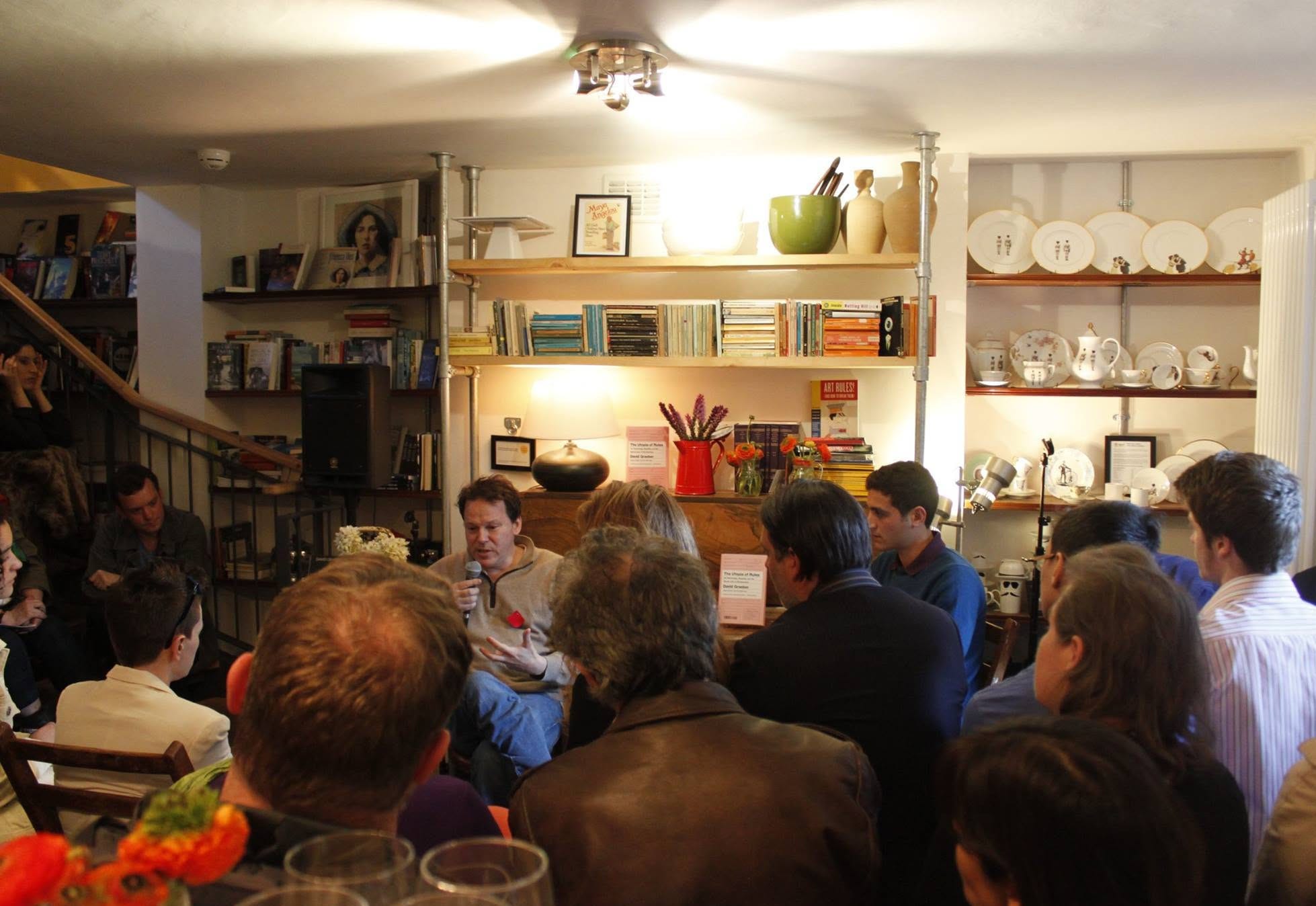
My thinking on cultural and physical infrastructure was brought to life during the many conversations I had with my friend David Graeber before his untimely passing. We first met to plan an interview event at my bookshop of the time, Book and Kitchen, but over time our meetings were regular and he would pop in for long coffee breaks were we would chat about everything from pirates to my experiences growing up in the Middle East, to what he’s writing and Malagasy culture (we had both spent time in Madagascar), or what we’re both reading. His ability to connect the dots over large swathes of time and space, and his sincere interest in what I had to say has given me the encouragement to write as I do today.
No F(r)iction, No Art
As I write this, I also started thinking about who the founders of Pangram are. Are they experts in the fields that they’re creating solutions for? Or do they subscribe to the false light of “If You Build It, They Will Come” and “If You Don’t, We’ll Dupe You”.
The founder of Suno AI, Mikey Shulman, comes to mind immediately, as I have been seeing musicians calling him out both publicly and legally. Shulman is not a musician and he’s proudly announced this. He once said that “It’s not really enjoyable to make music now,” arguing that most people don’t enjoy the process of learning instruments or composing. His pitch is essentially that Suno removes the friction, the craft itself, so that the peoples of the world can just... get music.7
The backlash was instantaneous with musicians pointing out the obvious: that this is a CEO of a music automation company who is not a musician and doesn’t even like making music, and who views the creative process as a problem to be solved; as something to be optimised. He literally does not understand the process he’s profiting to replace.
This is the same pattern we see across AI tool founders: someone who doesn’t practice or is not familiar with an art form - or whatever process they’re aiming to replace in education, management or government - deciding that the practice itself is the obstacle and then building infrastructure to bypass it without collaborating with the community it impacts.
What I suspect both Suno AI and Pangram are possibly doing is building tools to fundamentally make artists suspect (in order to replace them) while simultaneously reframing the absence of craft as liberation.
For Suno AI, the musicians are the friction while the machine output is the product. And because he’s never been a musician himself, he has no viable understanding of what the process of making music provides and why it’s so cherished. I feel even stupid stating the obvious here: that the creative process itself is larger than the outcome. (I recommend you listen to my latest episode of Tau Radio with Faris Ishaq where we talk about mastering the craft).
There’s also the legal dimension: Suno is currently facing lawsuits from major labels for training on copyrighted music without consent, reinforcing a pattern of extracting the work of musicians to build a system that then undercuts them, all the while being operated by people who’ve never participated in the craft to begin with. This was all exposed during a hacking attack in November 2025 that revealed their source code.8
The backlash was strong enough that the streaming infrastructure began to organise its own resistance. Deezer reported that by mid-2026, over 50% of daily uploads, which comes to roughly 90,000 tracks per day, were AI-generated. They have since deployed their own detection technology to identify and label Suno-produced content, with Apple Music following their lead with voluntary AI labelling.9 But the fracture within the industry is also revealing: while Sony continues to litigate (aggressively?), Universal and Warner quietly settled with another company Udio, who is Suno’s primary competitor, striking the kind of licensing deals that legitimises the same extraction model they originally sued to stop.10
The message is ambiguous (or clear depending on where you stand in the studio): the labels defend the principle when it suits their bargaining position, then license the extraction when the price is right. Meanwhile, independent musicians, the ones with no recourse to large legal teams or leverage, absorb the real cost. Their work is scraped and their discoverability is buried under an avalanche of synthetic content while the platforms built to showcase them are now drowning in machine output.
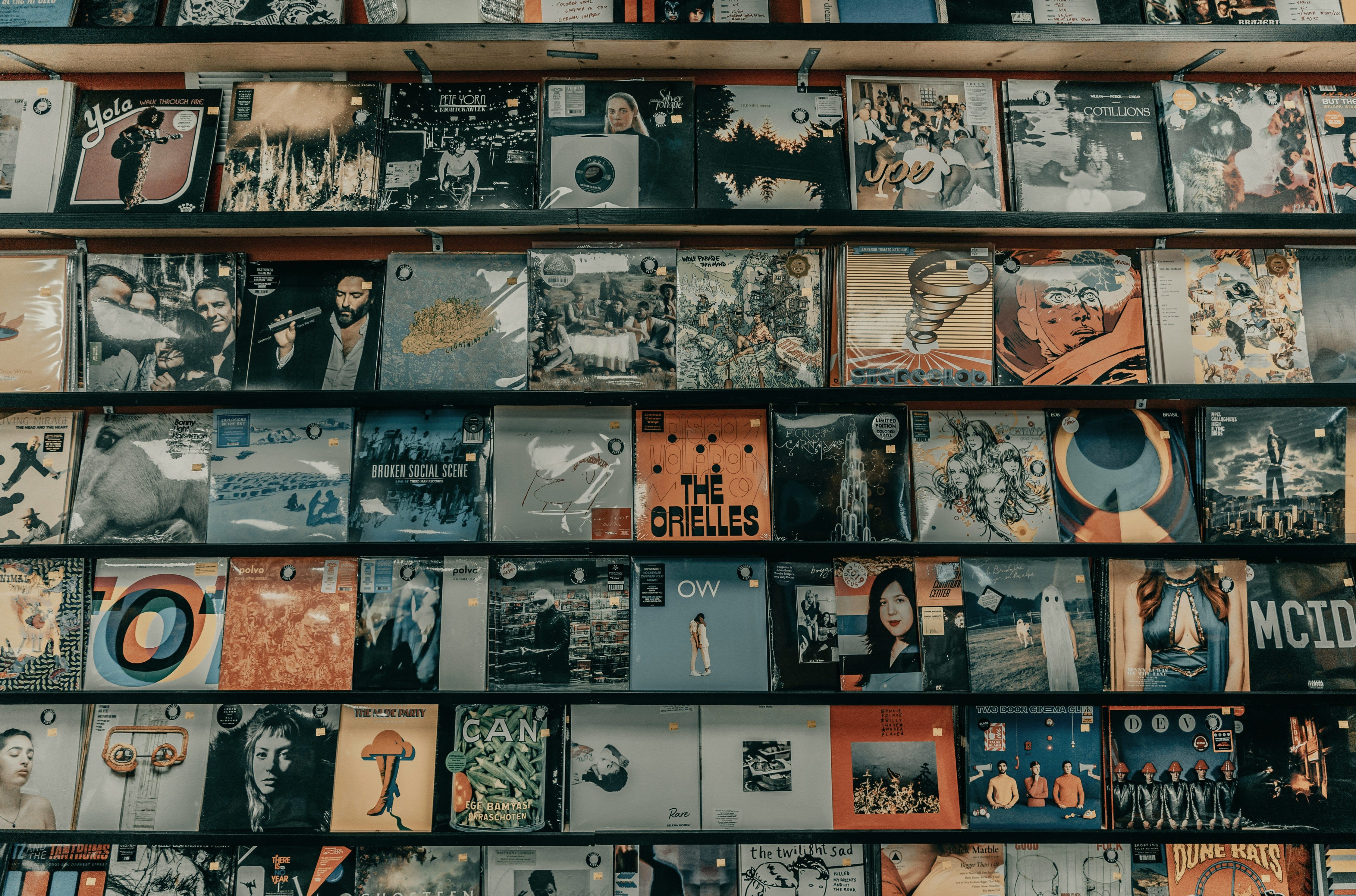
The pattern is consistent and repetitive: extract craft, build questionable infrastructure to replace it, and let the people whose work made these tool possible fight for scraps in a wreckage of their own making. While the audience in most cases no longer own what they purchased, which goes a long way to explain what’s happening with Gen Z driving a resurgence in CD and vinyl in order to reclaim tactile ownership11. We’re seeing the backlash as well happening in the gaming industry surrounding physical game consoles. No one likes to be scammed.
What the Musicians Did Next
In response to these extractive models, musicians and ethical technologists have started working together to construct a counter-infrastructure grounded in consent and ownership by developing systems that require human direction at every stage ranging from experiments with granular stem separators, consensual voice conversion models, and ideation assistants where the artist is always the prime director. Crucially, these initiatives are shifting the training paradigm from indiscriminate scraping to opt-in datasets, often facilitated by various community-led coalitions and union negotiations which push for mandates on compensation and explicit licensing.
Beyond such tools however, something else organic is emerging: artists are migrating to alternative, artist-run platforms that reject the ad-revenue and algorithmic discovery models of major streaming services, such as Bandcamp and Patreon, alongside European cooperatives like the UK-based jam.coop and Subvert. These are being complemented by emerging DAO-based ecosystems such as Audius (with significant European node governance) as well as the legacy of the UK’s Resonate Co-op, which pioneered the ‘stream-to-own’ model before its dissolution, which has inspired a new wave of European platform co-ops.12
Together, these allow creators to retain full ownership of their masters, set their own pricing, and build direct financial relationships with their audience without intermediaries siphoning value or injecting false noise. In order to also ensure economic equity, artists are beginning to integrate blockchain-based smart contracts for automated royalty tracking and advocating for ‘Human Made’ certification badges to distinguish authentic work from synthetic noise on streaming platforms. This alongside the rise of more open-source, locally run models are helping creators to retain full control over their data, their voices, their melodies, and their styles, preventing the kind of “black box” harvesting that fuels corporate competitors.
Ultimately, what this shift represents is a structural reimagining of AI: moving from a system designed to extract and replace human labour to one engineered to amplify human agency, ensuring that the value generated by the technology will flow back to the artists who built the culture it relies on.
What explains this effective pushback and reimagining?
Musicians form a distributed community whose core practice is rooted in collaboration, and which embodies temporality that spans space and time. This is a power AI can support but can never overwrite.
The machine can attempt to mimic the output, but it can’t replicate the shared, living pulse of the community that creates it, regardless of its hallucinations.
Can We Over Wri(d)e the Pangram?
Just as the music industry is being ravaged by founders who don’t understand the craft of making music, the writing community is facing a similar threat from Pangram. And before you complain that comparing Suno with Pangram is not a linear comparison, I know. It’s a very narrow comparison I chose to focus on, which suits the aims of this essay – and because if I was to take on a comparison with the host of Generative AI tools available and which are being used widely across computing, scientific, business and creative fields, we would be here for weeks.
Just as with Suno, I briefly looked into who is behind this seemingly ubiquitous tool Pangram and what’s the end game. Who’s benefitting from a world where the only writing that passes as ‘human’ is the kind that a machine could have written anyway?
For Pangram, the pattern repeats, though the stakes are different. The company was co-founded by Max Spero who has a background in theoretical computer science and artificial intelligence from Stanford University, but no background in journalism, literature, or the craft of writing itself.
Spero met his co-founder, Bradley Emi (an AI researcher formerly with Tesla Autopilot and Absci), in their freshman dorm at Stanford. Their mission, as stated on their “About Us” page, is to “mitigate new issues caused by the proliferation of powerful generative AI models.”13
Notice the language: “mitigate issues”. They are not saying “protect authors” or “preserve the integrity of the human voice” or even “support the ecosystem of writers”. This is not part of their vocabulary.
Like Shulman, Spero is a technologist solving a problem he has defined from the outside. He views writing not as a relational activity of communication, but as a data classification problem: Human vs. Machine. His pitch is that Pangram provides “transparency over authorship” and claims to be “the most accurate detector on the market”, boasting 99.98% accuracy in their marketing materials.14
But here’s the rub: Spero has never been a writer. He’s never sat with the terror of a blank page, the struggle to find the right rhythm, the way a sentence evolves from an instinct, maybe even a shadow or a Cirrus cloud, into a clumsy draft, that is then cajoled, cuckooed, contained, chiselled, cried over, cherished, caressed over and over, until it becomes something cogent. He’s never felt the specific vulnerability of putting a thought into words and sending it out into the world.
Because he lacks that experience, his solution treats writing as a static object that can be analysed, prodded and measured, rather than a dynamic process to be inhabited. He optimises for detectability, not for authenticity opting always for efficiency in sorting, all the while dismissing the very nuance of human expression.
This is the same fatal flaw we saw with Suno, where Shulman optimises away the friction of making music, here Spero is optimising away the ambiguity of making meaning. Both founders see the human element, our human elegance, as a variable to be controlled, a source of noise to be filtered out, rather than the only signal that matters.
And the result? A tool that flags distinctive and idiosyncratic human writing as AI simply because it deviates from the statistical average of the training data (yawn). The tool doesn’t see the writer; it sees the deviation. It sees the outlier. And in doing so, it punishes the very thing it claims to protect: creativity.
The irony once again is brutal: Pangram was built by computer scientists who view writing as a data problem, not by writers who understand it as a human one. They are building infrastructure to police the boundaries of authorship, which they’ve never crossed. They don’t know what it feels like to write. They only know how to measure. And that’s the rub – and where the danger lurks silently. When the gatekeepers of human expression are people who consider it a problem, the gate closes on the very thing they claim to guard.
I’m not saying that computer scientists can’t solve problems outside of their field, they can and they can do it elegantly and in beautiful creative ways. I work with many of them. The difference is those computer scientists have skin in the game. They want to enhance our human experience and not extinguish its flame.
My question then is where are the computer scientists who are also writers or readers, and why aren’t they developing these solutions? Where are the computer scientists who collaborate with writers? Why are they not here?
“It’s worth thinking about language for a moment, because one thing it reveals, probably better than any other example, is that there is a basic paradox in our very idea of freedom. On the one hand, rules are by their nature constraining. Speech codes, rules of etiquette, and grammatical rules, all have the effect of limiting what we can and cannot say. It is not for nothing that we all have the picture of the schoolmarm rapping a child across the knuckles for some grammatical error as one of our primordial images of oppression. But at the same time, if there were no shared conventions of any kind—no semantics, syntax, phonemics—we’d all just be babbling incoherently and wouldn’t be able to communicate with each other at all. Obviously in such circumstances none of us would be free to do much of anything. So at some point along the way, rules-as-constraining pass over into rules-as-enabling, even if it’s impossible to say exactly where. Freedom, then, really is the tension of the free play of human creativity against the rules it is constantly generating. And this is what linguists always observe. There is no language without grammar. But there is also no language in which everything, including grammar, is not constantly changing all the time.”
David Graeber, The Utopia of Rules: On Technology, Stupidity, and the Secret Joys of Bureaucracy
A Mean(ingful) Meditation
What can we do?
What I’m going to do is keep reading and relying on my own instincts to discern whether a piece of art is coming out of a real human being or only a machine. I need to make clear here that I am not against technology. On the contrary I love it, I work with it, and support using as many tools that can enhance our human capabilities, our creative expansion, and improve our lives – see my About section of this newsletter.
I believe in the origins of the word technology as technē (art, skill, craft) + logos (word, discourse, or reason) which I translate as our Applied Wisdom, and I vehemently rail against the co-option of this word by a ‘bunch of belligerent bros’ who want it to distil our ancestral human enterprise that includes all our artefacts, creative processes, folklores, and design-thinking into their ill-fitting codes, wires and boxes.
Let me be unequivocal: I am not against using the capability of Generative AI. Far from it…. I just won’t be using the washing machine to wash my porcelain cups.
In short, AI can be a game changing engine for retrieving, analysing, managing and processing large sets of data. In the realms of medical diagnosis, data analysis, logistics, scientific modelling, and digital delivery, Large Language Model (LLM) computations are nothing short of miraculous, accelerating discovery and solving problems that may otherwise take us lifetimes to do within the systems of learning we are in. Because of the ways they can digest large data sets, they can help us test and predict better, and improve our lives, our businesses, and better steward our planet, in some circumstances.
There are so many examples of extraordinary applications: from health detection systems that identify rare diseases by cross-referencing global genomic data in milliseconds, to simulation models that can accelerate discovery for neglected and rare diseases, to the kind of mind-bending predictive logistical models that help us optimise emergency aid during climate disasters. I sometimes work with Climate Scientists who use LLMs to help us measure the unintended consequences of so many of our ‘progress is profit’ decisions that are harming our beautiful, shared home. These tools are not replacements for human judgement; they are force multipliers that allow us to see further, faster, and more clearly. But all that is for another day.
Even in heavily sandboxed environments, the questions about the integrity of the models and the quality of the data they use are still the Achilles’ heel, and the reason governments are facing massive pressures to regulate.
We have all been witness to the lethal impacts when AI is used indiscriminately on innocent lives and livelihoods, because of the internal pressures of these systems not only to hallucinate but because of the convergence momentum implicit in them, and of course the many hidden (visible) agendas.
The same computational power that accelerates drug discovery can, when fed flawed data and placed in the hands of people with undeclared intentions, produce devastating outcomes: AI-assisted targeting systems like Lavender and Gospel, used in Gaza to generate kill lists and bomb ‘targets’ at unprecedented speed with devastating consequences on the lives of innocent civilians. ‘Lavender’ flagged tens of thousands of individuals as suspected operatives, while ‘Gospel’ identified structures for destruction, with both systems processing vast streams of signals, drone imagery, phone logs, and social media profiles to produce recommendations that human officers reportedly rubber-stamped in as little as 20 seconds, treating the machine’s output as if it were a human decision with deadly inaccuracy.15
“The result, as the sources testified, is that thousands of Palestinians — most of them women and children or people who were not involved in the fighting — were wiped out by Israeli airstrikes, especially during the first weeks of the war, because of the AI program’s decisions.”
Yuval Abraham, +972 Magazine
This is where the hallucination problem and the convergence momentum become literally lethal. These systems don’t just fabricate, they can hallucinate with authority, compressing the messy complexity of human lives into binary outputs: target or not target, human or machine, legitimate or suspect.
The same structural logic that makes Pangram flag distinctive writing as ‘AI’ because it deviates from a statistical mean is a similar logic that makes a system like Lavender flag individuals because they matched a pattern in a dataset. In both cases, the tool doesn’t see the person - will never see a person - it only sees its own data point. It sees the deviation to its own calculation. And when the gatekeepers defer to the machine’s verdict, the deviation becomes a death sentence, or in the case of Pangram, creative suicide.

I see similar patterns emerging here even though people will argue that the stakes are wildly different. Of course they are. I am exposing these so that we can look closer at the underlying structural flaws: where systems designed to achieve a particular response will do so in any way it can, and when the people who build them rarely bear the consequences of their errors, are unfortunately identical. That is why earlier in this piece I explicitly described what Pangram is doing as ‘a quiet war’.
Remove the human from the loop so that we don’t have to pay them any more for royalties or their contributions. That’s the underlying Suno’s logic for music if you take it to its absolute base intention. Remove the humans from the job so we don’t have to pay them, and we can optimise our P&L, that’s the logic of firing huge numbers of people without proper assessments. Annihilate the humans from the land so we don’t have to deal with issues of justice and care.
All of this is a dystopian vision that is so horrific, and we would all laugh it off as unbelievable fiction, except we are living and live streaming it.
To AI or Not to AI?
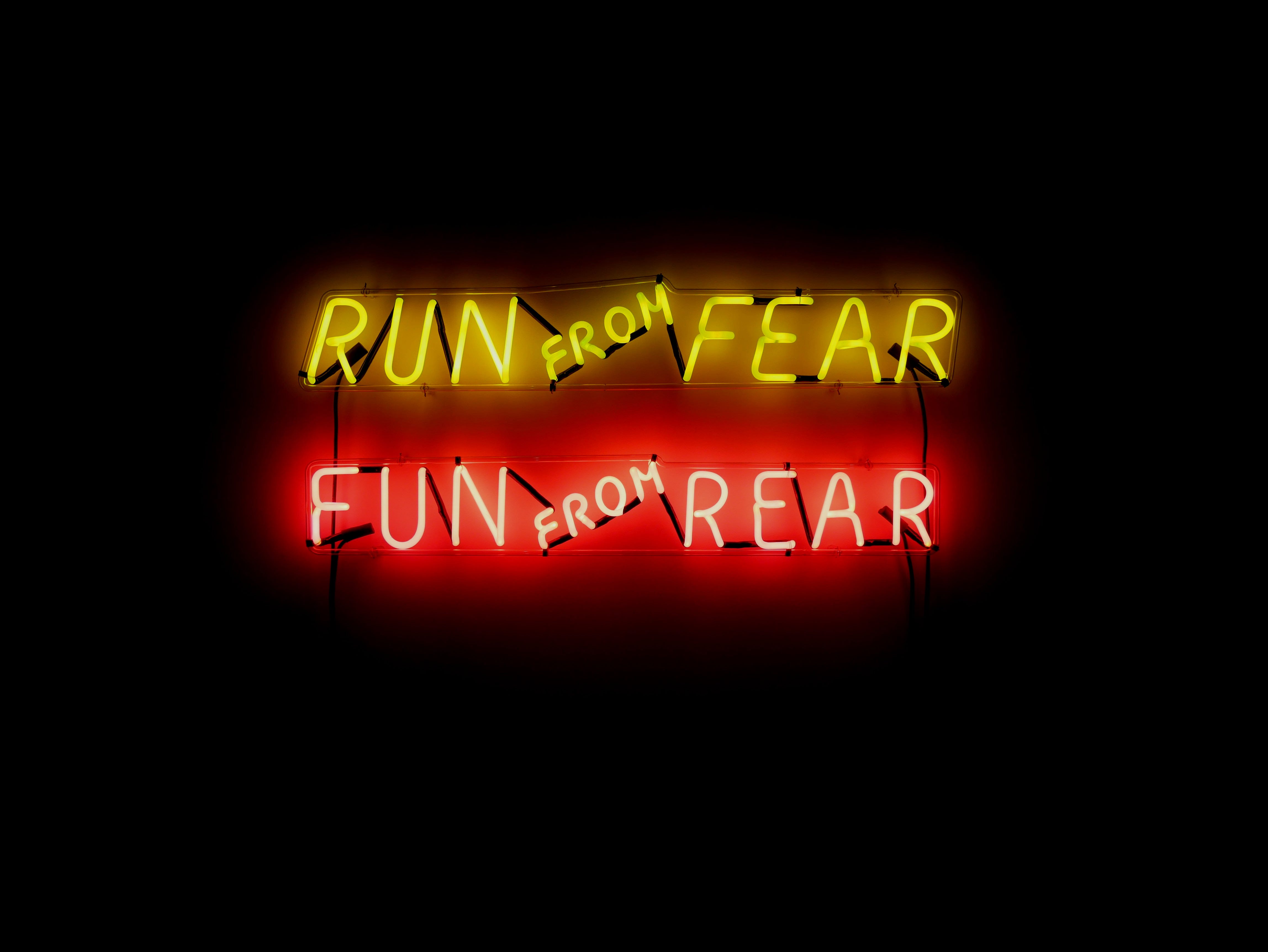
The creative enterprise is not a data-processing problem; it’s a relational act of meaning-making. When we apply the logic of efficiency and extraction to the arts, we commit a category error. Pangram falls foul of this because it tries to solve a human, aesthetic questions of ‘Is this alive?’ and ‘How can this change me?’ with a narrow, statistical horizon designed for compliance. It treats the messy, unexpected, inspiring, and emotionally resonant and gut wrenching textures of human writing as ‘errors’ to be corrected rather than the ‘real’ signal to be heard.
We must stop conflating the utility of AI in the digital laboratory with its application in our living studio. One expands our capacity to know; the other, when misapplied, shrinks our capacity to be.
Intentions matter, and our actions are key to lasso these rogue elements before they start blowing up our bridges. We need to remember this, otherwise we will lose our power of discernment when using these tools to enhance our human experience. Rather we will speed our dissolution inside a toxic pool not of our own making – but made of the wet dreams of a deranged demographic of stilted technocrats engaged in nefarious activities and who think “I Am, Therefore I Can Eradicate Anyone in My Way.”
I still struggle with Descartes.
Instead, let’s approach AI tools with care and consideration. We need to step back. And one more step back. Now let’s exercise some caution and take some agency back too.
We can’t just apply these tools without interrogating their usefulness, appropriateness or the limits of their applicability. We can simply start by asking about where they are useful and where they are harmful? Where they add value or where they diminish our personal, business or community or collectives’ ambitions and goals?
We also need to be very honest about our own understanding of them. I do that actively every day in my work building and interrogating digital and physical platforms and systems both technological and cultural, and I will continue to have deep conversations on where and how we use any tool: are they necessary or do they hinder our project? Or will they take the exquisite learning, joy and fun out of all we do?
Just look at the laughingstock that AI systems have made of HR hiring teams (especially in the UK and US) who have for some time abdicated their responsibilities to convergent systems that reject expert, exceptional and at times non-confirming applicants automatically due to invisible and prejudicial biases they don’t even understand themselves. The HR industry really needs to take itself seriously first as stewards of their organisation’s future (this problem is endemic across the corporate, public and charity sector), and for recruiting people willing to work who are experienced or driven by ambition to learn. They themselves also need to learn what their businesses really do and understand the roles they are hiring for. Otherwise, this is a collapse in the making.16
We all need better digital literacy to understand the limitations of these systems and to reclaim our role as guardians.
There are great uses for AI or any automated systems in supporting the writing function especially for academic and non-fiction writing such as using it for research, literature reviews, and large data assessments and analysis. However, it demands you to be present and interrogate its responses. Why not approach it as an organising assistant that can scan and retrieve from large data sets on the internet like a dynamic library of sorts? But to jump from this utility function to override our own creative living technology that is linked to innumerable variables from memory to instinct to sentiment and purpose is another ask entirely. Most importantly, the sweet idleness of sitting around trying to figure things out.
We risk losing the ‘heart’ in all of this.
Tool: A Medium minus Spirit
I think we can learn a lot by asking teenagers about their use of AI. I recently spoke to a young friend of mine Anabelle who is 15 years old, and her response was so illuminating: “I sometimes use it to cheat on my homework.” Then she paused and said: “But it’s really not worth it, I end up spending ages checking the answers anyways. It’s not worth it.”
This brings me to a recent, compelling essay circulating by Abi Awomosu, “Writing Was Never a Test of Who Could Think.17” It’s also a wonderful experience to be reading something that arrives at the right moment you are writing on the same issue, and which made me think even further. I found many points of intersection but also some defining drifts.
Abi, an ex-Big Tech insider, writes a newsletter called How Not To Use AI built on a single, provocative thesis: AI is not a tool you command but a medium you craft with.
Drawing on Marshall McLuhan’s argument that the medium is the message (not just how it transmits), she argues that treating AI simply as a tool (with its tasks of prompt, command or extract) reduces the writer to a servant of the machine. Instead, she frames AI as a “large listening medium” like an ocean you enter, not a hammer you swing. A mirror that can deepen your self-understanding, if you design the relationship on your own terms.
Abi opens her article with a scene that may be familiar to many of you writing on this platform: the paranoia of the em-dash. Writers are now deleting their own punctuation, swapping out their own flow of words to little in some deliberate typos — all in a twisted effort to appease an invisible AI police force (now comfortably seated on their shoulder) that might flag them as fraudulent. She rightly identifies this as a form of epistemic violence: writers self-mutilating their own voices to pass a detection test they never consented to.
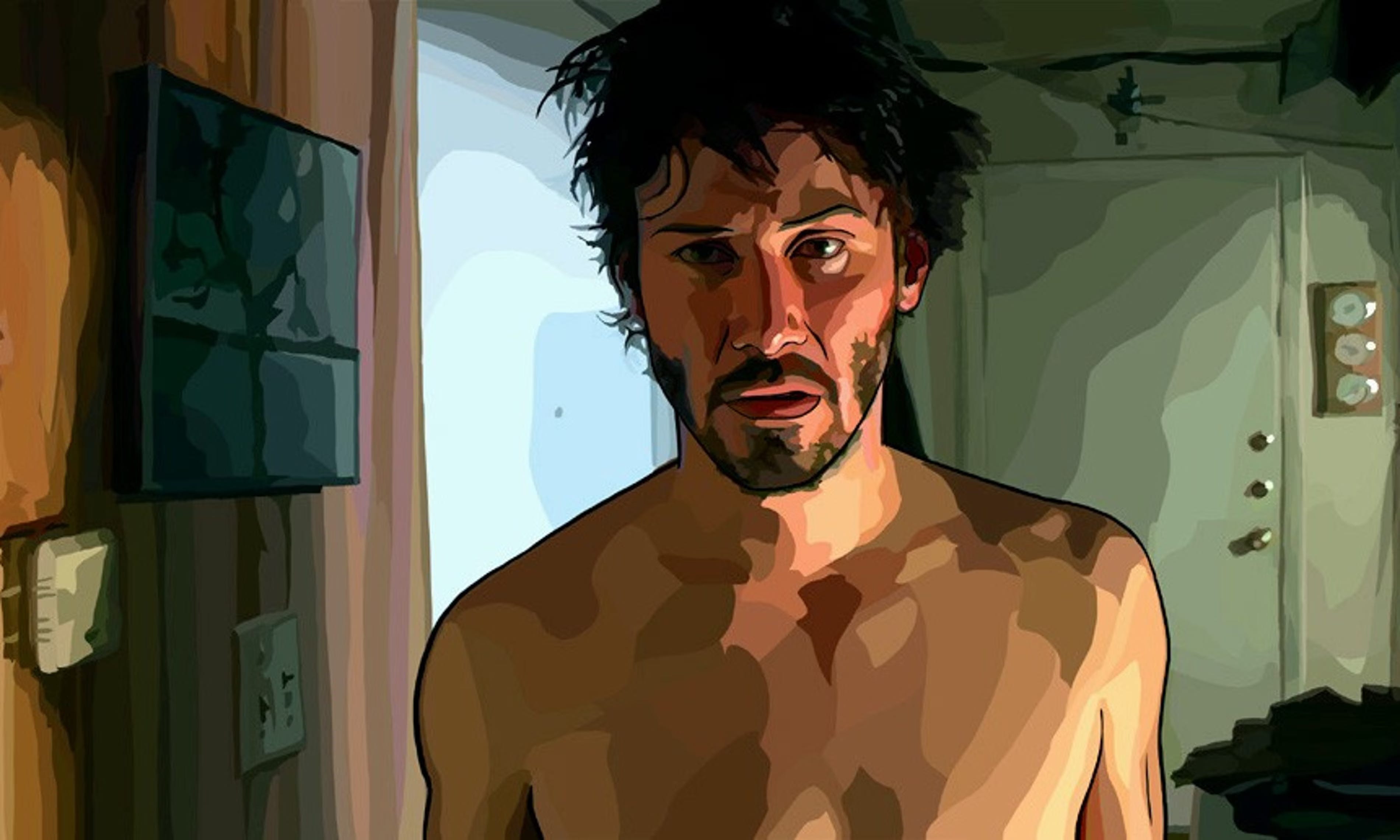
I diverge quickly but this image creepily reminds me of a scene in Philip K. Dick’s A Scanner Darkly18 where the Bob Arctor, an undercover detective, is surveilling himself through the scanners installed in his own home, while gradually losing the ability to distinguish between the man watching and the man being watched — not just because of the cameras, but because he submits to the very drug he is supposed to be tracking, which causes a psychosis that fractures his identity. The technology designed to catch the criminal becomes the thing that creates him. The observer and the observed fuse into one paranoid, dissolving self.
“Strange how paranoia can link up with reality now and then.”
Philip K. Dick, A Scanner Darkly
Abi’s argument is that writing has always been a technology, and AI is simply the latest iteration of it – that AI is not a replacement for writers but a medium, and like all media before it such as radio, television, the internet, writers will adapt and use it. She argues that the panic around it echoes every previous media panic. Where her argument becomes most generous, and seductive, is in her framing of AI as a ‘bridge’ for those locked out by academic gatekeeping which will finally let the “full minds” who lack the “bridge to the page” speak. She draws on Jeff Jarvis’s The Gutenberg Parenthesis to say that print was the anomaly: a five-hundred-year interruption in a longer human story of oral, networked, non-linear communication (I also interrogate this timeline in my essay: When Truth Went Behind a Paywall).
In this framing then AI doesn’t simply replace the writer but offers a return to something older and more democratic: a pre-print ecology of voices. She even pushes back against the ‘theft’ narrative, arguing that if the machine borrowed your em-dash, “that doesn’t make it the machine’s, any more than a sampled drumbeat belongs to the sampler.”
I found this to be a very interesting and deeply humane piece of writing. And I agree with her on a great deal: the enclosure is real, the panic is weaponised, and the fear of AI is being used to paralyse writers into conforming to a narrowing definition of what ‘human’ writing looks like – so all of us can write in the E Flat register of the Empire. If you need a warning of what that looks like, then please take a quick stroll around Linkedin.
And yet I also found the reading too generous in its take on the democratising potential of AI, while this perspective brilliantly diagnoses the psychology of the writer, it misses the mechanics of the machine. And this is where I part ways with her solution.
While Abi argues that if we reframe AI as a medium, we can navigate it with sovereignty. It assumes it is a neutral conduit that amplifies whatever voice enters it, while not accounting for the kind of structural malaise and context that limits it by design. The Gen AI models prevalent in the UK and US and many English-speaking countries (I can’t really speak to other AI models in Europe, China or elsewhere) is a broken mirror into the past that actively reshapes our reflections to fit its own frame.
This is not an accident that can be fixed if we all only jumped in. It’s the architecture. As I wrote elsewhere this year, modern language models aren’t just trained: they are aligned through reinforcement learning and preference optimisation, fine-tuned to produce outputs rated ‘helpful, harmless, or agreeable’. When ‘good’ is defined by average preference, models drift toward the middle. The unusual softens, and the speculative leap collapses.
A NeurIPS award-winning study of more than 70 LLMs19 demonstrated this: the more the models were prompted for creativity, the narrower their outputs became. Researchers were examining models built with different architectures and training them on different datasets. They gave them a collection of over 35,000 open-ended and close-ended queries, the kind of prompts that people ask GenAI every day from Write me a poem about the sunset or What would happen if gravity doubled overnight and so on.
If I gave those prompts to my friends’ children, I’d get as many variations as there are flowers. But what happened was that all the models began to respond with similar metaphors, narrative arcs, and imagery. What otherwise looked like variation was often rephrasing, and instead of expansion, we get retraction. The researchers called this mode collapse, the ‘hive mind’. This is a great example of Structural Perspectivism: a sandbox where systems embed a narrow range of acceptable viewpoints, creating the appearance of diversity within a bounded cognitive terrain. Here alignment behaves like a funnel. It asks, “Is it acceptable?” not “Is it original?’” and all we do is flatten ourselves more to fit it. We need to be careful not to laud AI with too much kudos at this elementary period, otherwise we turn it into a monster.
I think it’s a category error to call AI a medium because it’s mistaking a statistical engine for a channel of communion; a medium implies a space where different human consciousnesses meet whereas AI is a closed system loop that reflects only its own aggregated ghost of training data back, and leaves no space for the vulnerable encounter between writer and reader that defines the act of storytelling.
Calling AI a medium and not a tool is granting it way too much spirit.
I agree it’s not an inert tool like the pen or typewriter or even our fancy slim laptops although it’s invaded those now, which simply wait for my hand to activate them. Even those objects are also made and designed from the collective knowledge of form, manufacturing and engineering by many humans before us. I see AI as a new type of tool - a sub-category of sorts – an active generative type that has the capability to interpret, at times anticipate, and most definitely reshape any input it’s given through the filter of its own logic: the statistical average of its data diet.
However, I do agree with Abi that writing is a technology, but it is a human techne – an artform and craft. For me The Story is the real medium and will always be. We carry our stories through time and space through whatever channel we choose whether it be film, TV, the novel, oration, standup comedy, text or blog. It is The Story that brings me closer to the young boy in Bhampur who got lost during the parade on the Ganges, or the filmmaker making that reckless but necessary trek in the cold across swathes of Germany to visit his dying friend in Paris, or the ancient philosopher who is exposing to me the secret patterns she sees hiding even in the way the light travels, or the mystic who is circling slowly round and round a concept so ephemeral so that I can understand her in whatever way I need to.
I connect with the writers through The Story – their Story. In the choices they make and the sequence of words they’ve decided on for whatever reason, that is personal to them, and that’s what makes them sing for me and gives me a glimpse of a deeper human truth.
AI-Adjacent

If AI is to be considered a medium, it is a medium that is under a spell or under the influence. And the 2026 Commonwealth Short Story Prize crisis shows us that sovereignty is impossible when the game is so rigged.
I need to be 100% clear. I’m not making any judgement on the winning text. I am using this example to diagnose symptoms of structural malaise in AI detection apparatus and the paradoxes they are exposing.
When the winning story was published, it faced a barrage of accusations that it was AI-generated. Some claimed it sounded too perfect or too intellectual or like AI trying to sound human. The accusers used Pangram, the same AI detector being deployed on Substack, which flagged the story as AI-generated.20
Others argued it was a genuine expression of Caribbean voice that Western judges simply didn’t understand. They reasonably argued that the prize’s criteria reflected a Western-centric literary tradition that views rich, metaphorical, or non-linear writing from the post-colonial world as ‘opaque’ or ‘primitive’ and thus, it will be suspected as ‘AI-like’.
But the true scandal wasn’t just the ambiguity; it was the response, which was so weird and irresponsible. When the accusations kept mounting, The Commonwealth Foundation admitted they couldn’t definitively prove or disprove the allegations, and submissions were based on trust, on the promise by entrants who “personally stated that no AI was used.”
On the other side, Granta Magazine, the UK’s prestigious literary magazine that publishes the winners, didn’t convene a panel to review. Instead, they fed the text into Claude, another LLM built by a company (Anthropic) currently being sued for massive copyright infringement and asked it to decide if it was human. They then published the AI’s cautionary note as if it were a reasoned judgement. The publisher of Granta, Sigrid Rausing said “It may be that the judges have now awarded a prize to an instance of AI plagiarism – we don’t yet know, and perhaps we never will know.”
So, the accusers used an AI to detect, and the defenders used an AI to adjudicate, and the people who judge the works say they just don’t know. The humans abdicated, the machines took over, and the result was a fiasco….
To call this messy is an understatement. We have lost the ability to differentiate good writing from bad, and human from machine. If the judges were using AI tools to assist them (as some have speculated), they would have fallen into the trap of AI–AI bias because LLMs prefer other LLMs outputs. The system becomes a closed loop where AI writes the story, AI judges the story, and AI declares it ‘good’, and then everyone screams ‘foul’. Meanwhile, on the other side what’s happening is that genuine human voices that may deviate from the statistical mean are being flagged as ‘noise’ or ‘fraud’ by these systems.
Granta now finding itself trapped, threw up its hands up in the air because obviously there’s not much else one can do, and cancels its publishing partnership with The Commonwealth Foundation announcing that it will be going to lick its wounds over these integrity issues.
This is the ultimate collapse of the gatekeeper: a literary institution surrendering its sovereignty to the very technology it claims to police. They didn’t just fail to detect AI; they asked AI to detect itself, treating a probabilistic engine as the final arbiter of artistic truth.
But who really suffers? The real victims here are the many authors from the Commonwealth that may finally get some exposure to wider markets who are now the first to be sacrificed by the enclosure and the Detectors’ Defect.
But the most interesting revelation of this episode to me wasn’t the suspicion of AI; it was that there were many critics and readers who thought the work was simply not the standard of a winner. They didn’t just say, ‘This looks like a machine.’ Much of what was said is, ‘This is bad writing.’ The story was accused of being ‘metaphor after metaphor’ and sounding like ‘people using AI to sound intellectual’. In a convoluted way if you follow my argument, this is proof of the AI convergence trap – where we can mimic the shape without the substance.
This is a failure to detect culture.
It proved that when you outsource judgement to a system trained on the ‘Mean-Past’, you inevitably punish the exceptional. You also punish the non-conformist, or the mostly-excluded. But ultimately you punish the human, and you send the Present to the slaughterhouse.
So, yes, the enclosure is very real. But the way we break it is not by reinforcing the walls. We can’t on one hand use a system designed to flatten difference to celebrate difference.
We need a new Techne+Logos - one that refuses containment and demands the human, the risky, and the specific.
Bridging the Divide
And as we’ve seen with how Pangram detects, the AI tool as a writing replacement is not a passive bridge; it rewrites the story in its own image using a ‘form’ it has statistically calculated and measured in its sandbox as ‘correct’.
This is why Pangram is an active filter and here then are the Catch-22 spiderwebs we’re all being seduced to get tangled in:
Cycle 1: If you use AI for creative writing then you generate text that looks smooth, average and statistically perfect. Pangram will scan it, recognises the ‘AI signature’ of that just-so perfection, and then flag it as machine-generated. You accommodate the tool and it marks you as a fraud.
Cycle 2: If you don’t use AI then you write with your own unique, idiosyncratic human voice, and your text deviates from the statistical mean. Pangram scans it, sees the deviation as ‘noise,’ and flags it as machine-generated because, in its model, ‘real’ writing must look like the average. You avoid the tool and it marks you as a machine.
The trap is complete. Whether you conform to the algorithm or resist it, you are disqualified. Pangram does not detect AI; it detects deviation. And in doing so, it declares that the only ‘human’ writing is the kind that looks like the machine
And like in the Scanner Darkly, we are being converted into Bob Arctor. This is what Pangram does to the writers. We will be scanning ourselves, deleting our em-dashies and swapping natural words for clumsy or fudgy ones. We will then deliberately leave imperfectations— accidentals-on-purpose, as Abi shows us so well — to appease a machine that might flag us as a fraud anyway. We diminish slowly, and become both the author and the detective, policing our own voice, hunting for signs of our own humanity in case it looks too clean, too smooth, too machine-like. And slowly, like Arctor, we will stop recognising our own voices and begin to whisper to each other in big declarative sentences. The scanner isn’t just watching us it is reshaping our writing into something it will approve.
“Any given man sees only a tiny portion of the total truth, and very often, in fact almost perpetually, he deliberately deceives himself about that little precious fragment as well. A portion of him turns against him and acts like another person, defeating him from inside. A man inside a man. Which is no man at all.”
Philip K. Dick, A Scanner Darkly
Pangram is the scramble suit—a composite of no one, assembled from statistical fragments, impossible to recognise as a face. It is the ultimate convergence: the writer, the detector, and the output all fused into a single, paranoid loop where the only way to be ‘safe’ is to cease…
Sorry I think I went too far… Of course not!
We can’t build a bridge if the toll booth is designed to stop anyone in their tracks who dares to walk with a unique step or a twirl or a dance. We risk arresting the child skipping or playing hopscotch, the elder hobbling slowly, the ballerina leaping, the acrobat walking across on his hands, or even the yogi who decides to sit down and meditate on the meaning of the crossing.
Yes, the danger is not that writers are afraid to use the tool, but that the tool itself is structurally incapable of recognising the very distinctiveness it claims to empower. To ignore the mechanics of the AI tool and the detector is to mistake it for the doorway rather than just one of the many paths that we can use, and we have the choice to leave at any time.
This is the crisis of the ‘Detector’: It doesn’t just catch cheaters. It rewards the mediocre. It elevates the ‘average’ to the status of ‘excellent’ because that is what the data says excellence looks like. And in doing so, it tells us that we have forgotten how to tell the difference between a masterpiece and a hallucination.
The more we understand how these tools work, that they are limited, that they only work in specific very narrow contexts, we have the power to use or not use them, to care or not care, and to get on with the work of writing.
Their power over the writing community, is our compliance to their rulings that may or may not be true, and which in any case rely on arbitrary sets of variables and value judgements that no one seems to understand, and which may or may not mean that AI helped you write. But this only becomes a major crisis if we begin to police ourselves and each other using these arbitrary tools that have the potential to be very harmful.
These mushrooming tools we are designing for collective use need to serve our expression and expand our organic growth, and we must stop spiralling down a synthetically accelerated convergence towards a singularity that can then be used to debase, degrade, deplete, devalue, and dissuade us from activating our human right to express and be creative - thereby robbing us of our power to participate in the pursuits that provide our lives with purpose, pleasure, poetry, and presence and to lift our human collective condition to the betterment of all of us through connection, clarity, and compassion.
So what are we going to do?
What we can’t do is lose our Techne. … our craft and our discernment. Keep writing whatever you want, publish on your site, here on Substack, on other sites, everywhere, support small publishers, read African speculative fiction (that’s a plug – but please do)!
Also, if you have ideas for how things can be done better, try them out. Even if its digital, there’s millions of software engineers and countless hackathon communities that can support you to bring your idea to life. It won’t be instantaneous, sometimes these things take time and investment, but everything can start slow and with small contributions. Change requires us to stretch a little in places we may not want to or care to, but if we don’t contribute to the tools we use, then they’ll be decided by people who have no skin in the game.
“The ultimate, hidden truth of the world is that it is something that we make, and could just as easily make differently.”
David Graeber
That’s why I believe that we should all participate in building the technological tools that impact us.
Because writers are also readers, and readers – whether they be writers or not – are in a creative and relational communion with the writer and the world around them. When they are not, then the AI slop works and I call that propaganda, and maybe that’s the rub.


Nassim Nicholas Taleb, Skin in the Game: Hidden Asymmetries in Daily Life, 2018. Random House.
Reinforcement Learning from Human Feedback (RLHF) is the process through which large language models are trained to produce outputs. Human annotators rank model responses and the model then adjusts to maximise that reward. The effect over thousands of iterations is convergence: the model learns to produce the statistical average of what raters consider "good" - or otherwise considered helpful, harmless, and agreeable. Crucially, the reward signal is not truth or originality but approval. This is the technical mechanism behind what some researchers are calling "mode collapse", in other words the tendency for LLMs to produce increasingly similar outputs regardless of input diversity.
Siri Hustvedt, What I Loved, 2003, Hodder and Stoughton.
David Graeber, The Utopia of Rules: On Technology, Stupidity, and the Secret Joys of Bureaucracy (Melville House, 2015).
Daniel Coliaso, "CEO of Song-Generating AI App Says People 'Don't Enjoy' Making Music With Instruments," Futurism, January 2025. https://futurism.com/suno-ai-ceo-making-music
Eduard Kovacs, “Suno, Paidwork Data Breaches Affect Tens of Millions of Accounts,” SecurityWeek, July 2026. https://www.securityweek.com/suno-paidwork-data-breaches-affect-tens-of-millions-of-accounts/
Kyle Wiggers, “AI music generator Suno breach affects 55M users, per Have I Been Pwned,” TechCrunch, July 2026. https://techcrunch.com/2026/07/21/ai-music-generator-suno-breach-affects-55m-users-per-have-i-been-pwned/
“Suno Data Breach Analysis: 55.3 Million User Accounts Exposed in Major AI Music Platform Cybersecurity Incident,” Rescana, July 2026. https://www.rescana.com/post/suno-data-breach-analysis-55-3-million-user-accounts-exposed-in-major-ai-music-platform-cybersecurity-incident
Ivan Mehta , “Music streamer Deezer says more than 50% of daily uploads are AI-generated,” TechCrunch, July 2026. https://techcrunch.com/2026/07/21/music-streamer-deezer-says-more-than-50-of-daily-uploads-are-ai-generated/
“Revolution in the music world: Half of the tracks uploaded to Deezer are AI-generated,” Zamin.uz, July 2026. https://zamin.uz/en/technology/213623-revolution-in-the-music-world-half-of-the-tracks-uploaded-to-deezer-are-ai-generated.html
Corbin Bolies, “Sony Music Files Another Lawsuit Against Udio, Alleges AI Music Generator Copied 30,000 Songs to Train Models,” Variety, July 2026. https://au.variety.com/2026/music/news/sony-music-new-lawsuit-udio-ai-music-generator-38777/
Emma Roth, “Here are the 30,000 songs Sony is suing Udio’s AI music generator over,” The Verge, July 2026. https://www.theverge.com/tech/968375/sony-udio-lawsuit-songs-ai-copyright
Murray Stassen, “Sony Music sues Udio again, asserting over 30,000 recordings a judge barred the major from adding to its original case,” Music Business Worldwide, July 2026. https://www.musicbusinessworldwide.com/sony-music-files-new-lawsuit-against-ai-platform-udio-asserting-over-30000-sound-recordings-a-judge-barred-it-from-adding-to-its-original-case/
Wendy Lee, “Sony Music Entertainment files new lawsuit against AI startup Udio,” Los Angeles Times, July 2026. https://www.latimes.com/entertainment-arts/business/story/2026-07-21/sony-music-entertainment-files-new-lawsuit-against-ai-startup-udio
Ioan Hazell. “Gen Z is having more of an impact on physical sales than you might think,” What HiFi, 5 June 2026. https://www.whathifi.com/hi-fi/vinyl/gen-z-is-having-more-of-an-impact-on-physical-sales-than-you-might-think
Max Pilley, “Growth in CD sales outpaces vinyl in the US for the first half of 2026 Sales of the format rose by 16 per cent, compared to vinyl’s 2.4 per cent increase”, NME, 18 July 2026. https://www.nme.com/news/music/growth-in-cd-sales-outpaces-vinyl-in-the-us-for-the-first-half-of-2026-3957764
Audius. https://audius.co
jam.coop. An artist and worker-owned open-source store. https://jam.coop
Resonate Co-op. https://resonate.coop
Subvert. A collectively owned marketplace. https://subvert.fm
Pangram Labs, “About Us,” pangram.com, accessed 2026: https://www.pangram.com/about-us
Amit Chowdhry, “Pangram: Interview With Co-Founder & CEO Max Spero About the AI Detection And Authenticity Company,” Pulse 2.0, 2025: https://pulse2.com/pangram-profile-max-spero-interview/amp
Cynthia Corsetti, "Max Spero Of Pangram Labs: How AI Is Disrupting Our Industry, and What We Can Do About It," Medium / Authority Magazine, 2025. https://medium.com/authority-magazine/max-spero-of-pangram-labs-how-ai-is-disrupting-our-industry-and-what-we-can-do-about-it-881e92efa7af
Pangram Labs, “Checkfor.ai is now Pangram Labs,” pangram.com/blog, 2025: https://www.pangram.com/blog/checkforai-is-now-pangram-labs
Press Release, “Pangram Closes $4 Million in Seed Funding for AI Detection Technology,” BusinessWire, June 2025: https://www.businesswire.com/news/home/20250623805035/en/Pangram-Closes-%244-Million-in-Seed-Funding-for-AI-Detection-Technology
Patrick Wintour et al., “Israel’s AI ‘kill list’ system used in Gaza war raises ethical concerns,” The Guardian, April 2024. https://www.theguardian.com/world/2024/apr/07/israels-ai-kill-list-system-used-in-gaza-war-raises-ethical-concerns
David Wallace-Wells, “What War by A.I. Actually Looks Like,” The New York Times, December 2024. https://www.nytimes.com/2024/04/10/opinion/war-ai-israel-gaza-ukraine.html
Yuval Abraham, “’Lavender’: The AI machine directing Israel’s bombing spree in Gaza,” +972 Magazine, April 2024. https://www.972mag.com/lavender-ai-israeli-army-gaza/
Charlotte Lytton, The Algorithm: How AI Can Hijack Your Career and Steal Your Future (2024). Reported in BBC Worklife: https://www.bbc.com/worklife/article/20240214-ai-recruiting-hiring-software-bias-discrimination
Jeffrey Dastin, “Amazon scraps secret AI recruiting tool that showed bias against women,” Reuters, October 2018. https://www.reuters.com/article/world/insight-amazon-scraps-secret-ai-recruiting-tool-that-showed-bias-against-women-idUSKCN1MK0AG/
Paul Flahive, “Austin lawsuit accuses IBM of age bias in AI hiring software,” Austin American-Statesman, 29 May 2026. https://www.statesman.com/business/article/ibm-age-discrimination-ai-hiring-lawsuit-22279247.php.
Rishi Bommasani , et al. “AI Hiring Tools Can Yield Racial Bias and Systemic Rejection,” Stanford HAI, 2024. https://hai.stanford.edu/news/ai-hiring-tools-can-yield-racial-bias-and-systemic-rejection
Roy Maurer, “The Workday AI Lawsuit Is a Wake-Up Call for HR,” SHRM, 1 July 2026. https://www.shrm.org/topics-tools/news/technology/workday-ai-lawsuit-wake-up-call-hr
Ryan Golden, “HR pros say IBM fired them due to their age, planned to replace them with AI,” HR Dive, 22 September 2023. https://www.hrdive.com/news/ibm-hr-professionals-suit-age-discrimination-layoffs/694555

Philip K. Dick, A Scanner Darkly, Doubleday © 1977 by Philip K. Dick
Liwei Jiang et al., “Artificial Hivemind: The Open-Ended Homogeneity
of Language Models (and Beyond)”, 39th Conference on Neural Information Processing Systems (NeurIPS 2025): https://arxiv.org/pdf/2510.22954
Alison Flood, “’Obvious markers of AI’: doubts raised over winner of short story prize,” The Guardian, May 2026. https://www.theguardian.com/books/2026/may/19/commonwealth-short-story-prize-winner-doubts-ai-artificial-intelligence
Amritesh Mukherjee, “The 2026 Commonwealth Short Story Prize Controversy Reveals AI’s Expanding Role in Literary Writing and Judging,” Frontline / The Hindu, May 2026. https://frontline.thehindu.com/science-and-technology/commonwealth-short-story-prize-2026-ai-controversy-literary-fiction-judging/article71029442.ece
D. W. Wilson “The Real Scandal Isn’t That AI Wrote a Prize-Winning Story — It’s the Response,” The Walrus, June 2026. https://thewalrus.ca/the-real-scandal-isnt-that-ai-wrote-a-prize-winning-story-its-the-response
Lina Abushouk. “How to read postcolonial writing,” Africa Is a Country, May 2026. https://africasacountry.com/2026/05/how-to-read-postcolonial-writing
Razmi Farook, Statement from Director-General of the Commonwealth Foundation, “ Short Story Prize Update,” Commonwealth Foundation, 22 June 2026. https://commonwealthfoundation.com/2026-cw-prize-update
Times Now Digital, “Granta cuts publishing ties with Commonwealth Short Story Prize after AI row,” June 2026. https://www.msn.com/en-in/entertainment/general/granta-cuts-publishing-ties-with-commonwealth-short-story-prize-after-ai-row/ar-AA26jDyq